The diagnostic visit
What Happens on a Diagnostic Visit
Before anything gets fixed, it gets measured. The visit is where that happens: the technician tests the machine in your home and writes out what failed and what the repair will cost.
- Trip charge quoted on the callback
- Credited to the repair if you say yes
- Findings and cost in writing
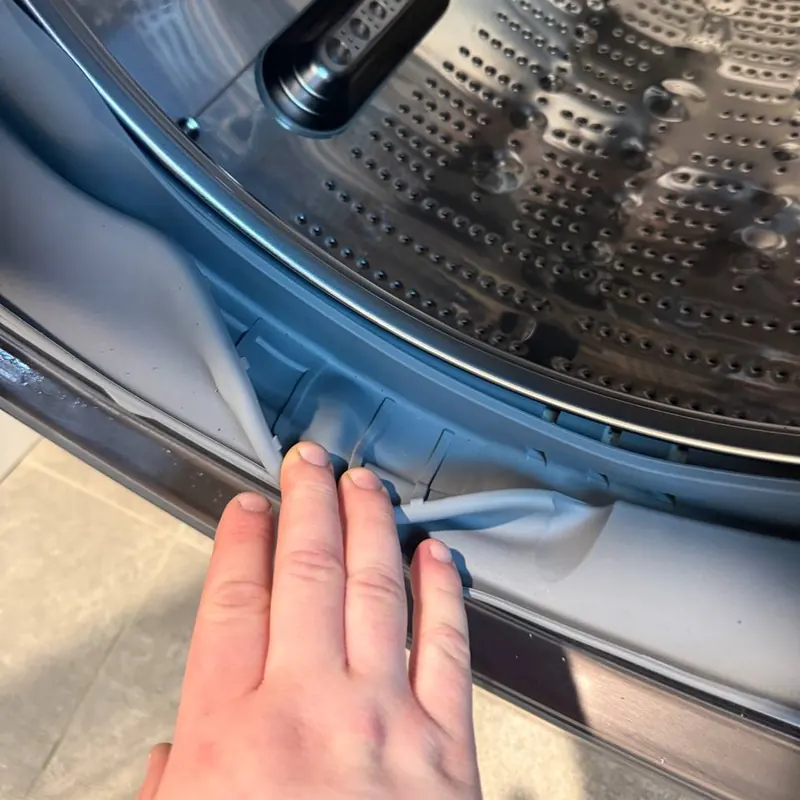
Checking the door boot
Snapshot 1 of 9
A hand runs along the door gasket of an LG washer, feeling for tears and for anything caught in the folds.
The same cooktop with the grates lifted off. The lit burner throws a lopsided flame, a sign to clean the ports and reseat the cap.
Gray residue and a rust-colored film packed into a washer door boot. That fold holds water, and it is where most front-loader smells begin.
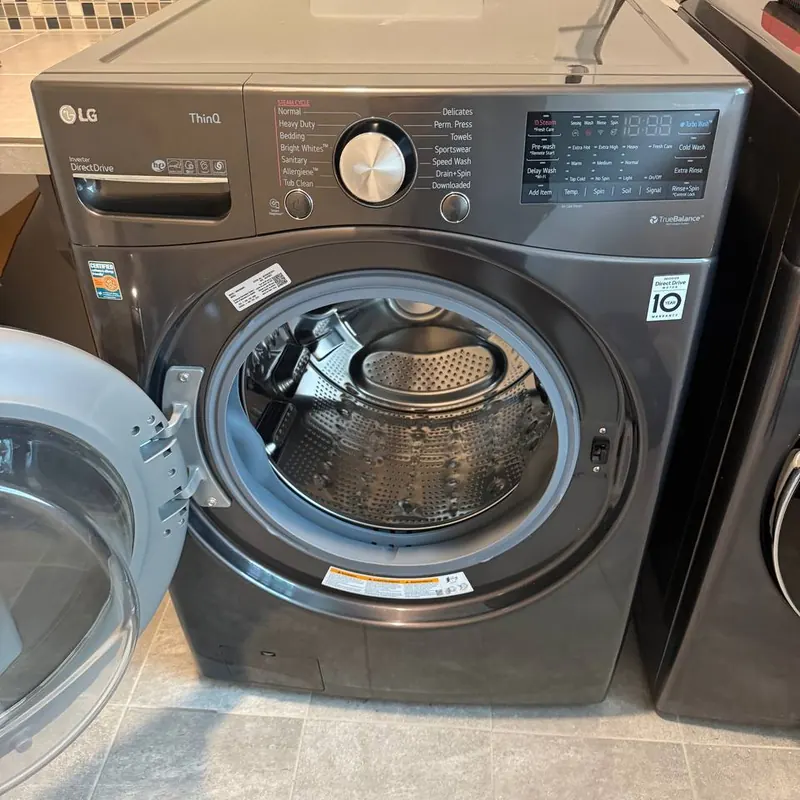
An LG front-loader with the door open and the drum in view. LG is one of the two makers that authorized us, so its warranty repairs come straight to us.
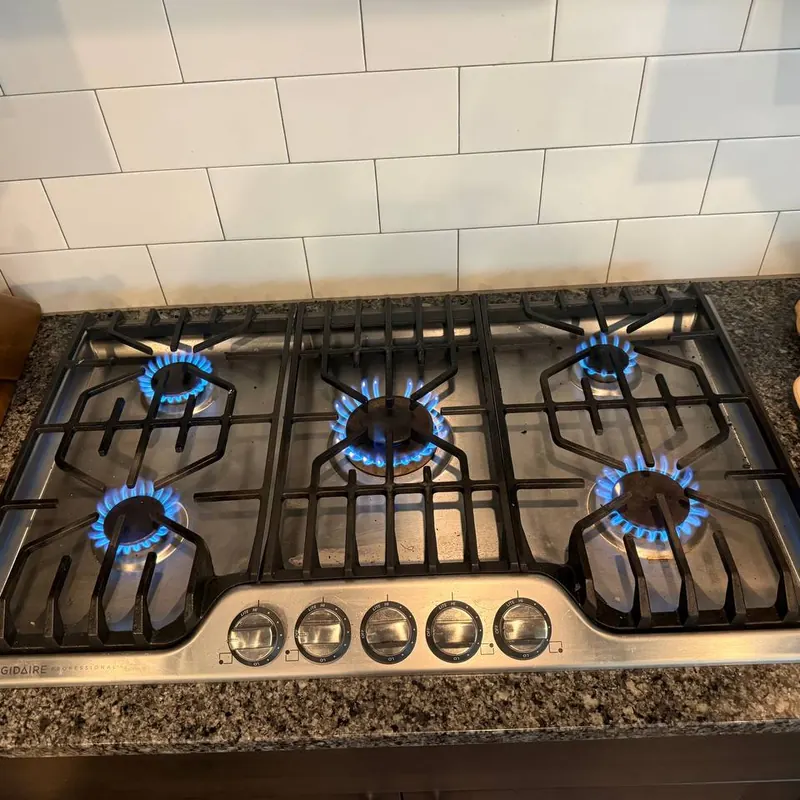
A Frigidaire Professional gas cooktop with all five burners lit: short, even blue cones on every port, which is how a healthy burner looks.
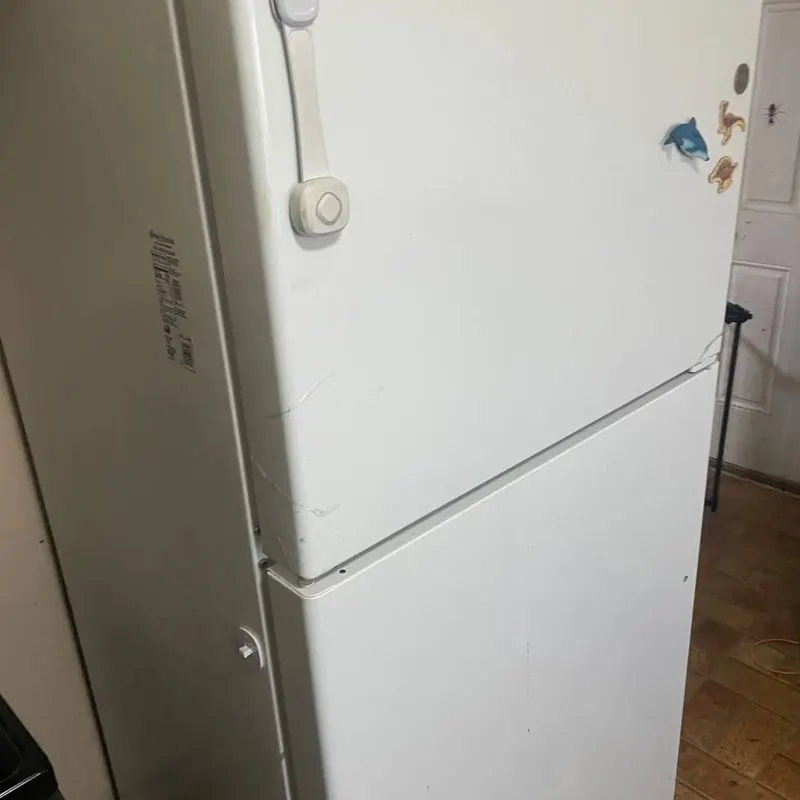
A white top-freezer refrigerator. If the milk below turns warm while the ice cream up top stays hard, the coil up top has usually iced over or its fan has quit.
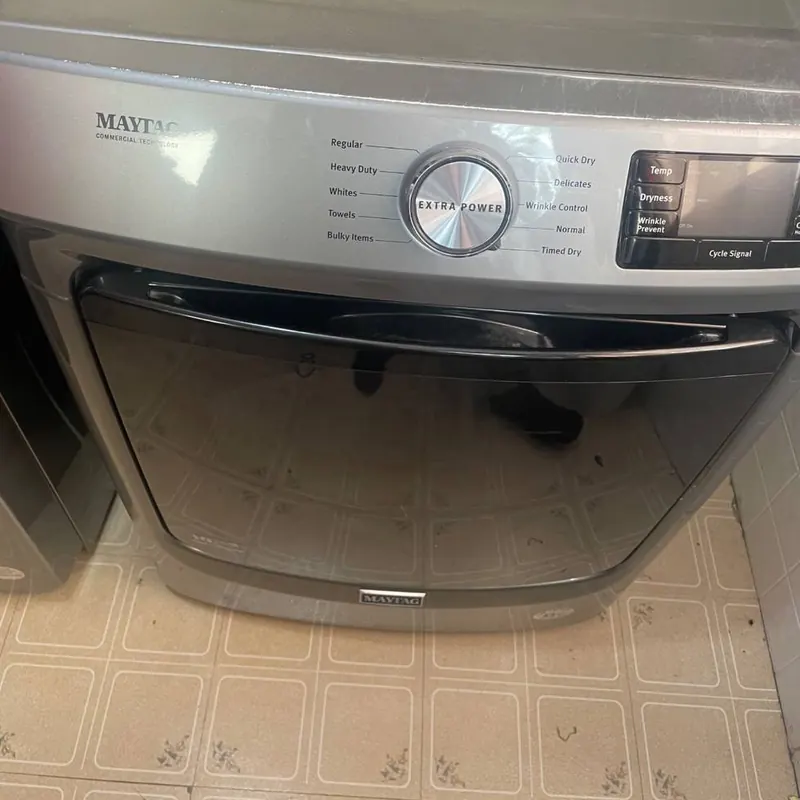
A Maytag front-load dryer. Maytag comes under our Whirlpool authorization, so its covered repairs run through us as well.
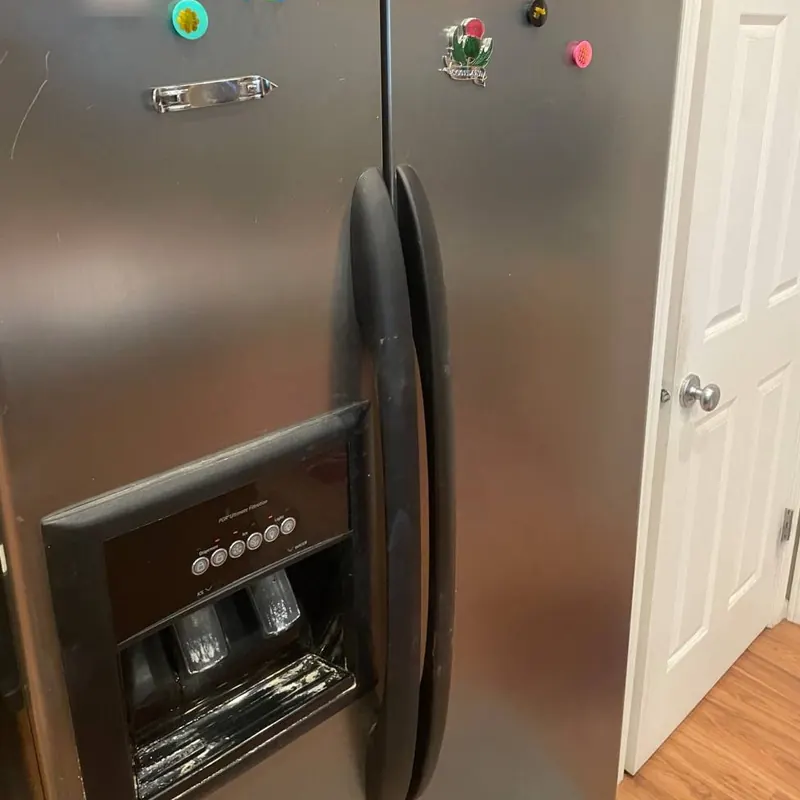
A stainless Kenmore side-by-side with a dispenser on the freezer door, so a water valve and a filter join the list of parts to test.
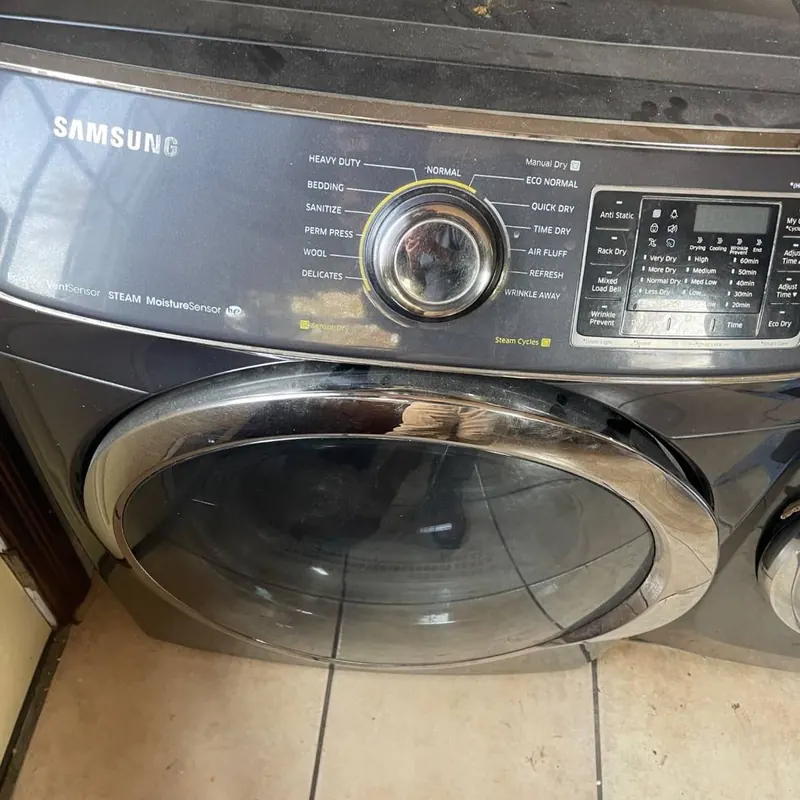
A Samsung dryer with steam cycles and a moisture sensor. Long run times on a dryer like this send us to the vent before the heater.
- Washington appliance repair license
- Authorized LG and Whirlpool service
- EPA 608 Universal technicians
- Sealed systems repaired on site
- Open seven days, 8 to 7
At your door
What the technician does
First the outlet and the breaker: a surprising number of so-called dead appliances simply lost power. Next the machine runs while the technician watches and listens, and the meter goes on the parts that match what you described, such as heater resistance, a valve coil, a door switch, or a sensor that should change as it warms.
Once the readings point somewhere, you see it too, and the repair cost goes on paper with the part and the time included. Some machines are not worth it, a front-loader with a seized tub bearing, say, or a fridge with a dead compressor and a dead board. In that case we tell you and stop.
In order
Four stops on every visit
- 1
Tell us about it
Call, or fill in the booking card with the machine, its symptoms and your ZIP. Our office rings back to pick an hour that suits you, on any day of the week.
- 2
We test first
The technician checks the outlet or breaker, runs a cycle, and clips a meter onto the parts that match the symptom. Readings, not guesses, decide the diagnosis.
- 3
You approve a written price
You see the repair figure, in ink, before anything comes apart. Go ahead, and the trip charge melts into it; pass, and the trip charge settles it.
- 4
Fixed, with paperwork
Our vans stock the igniters, pumps, valves and fuses that fail most, so plenty of repairs end on visit one. Waiting on an ordered part? The second visit goes on the calendar before we drive off, and your invoice names the warranty period.
After the diagnosis
Parts, return trips, warranty
Parts on board
The parts that fail most, from igniters and fuses to pumps, valves, locks and fan motors, are already in the van.
When we order
If a part has to come in, we set the second visit before leaving and explain what to do with the machine meanwhile.
Coverage
The invoice states how long the repair is covered. LG and Whirlpool-family machines still under the maker's warranty go through us as authorized service.
Pick a flag
What we fix
Seven flags on the line, one for each kind of job. Tap one, or let the line run on its own.





Flag 1 of 7
The diagnostic visit
Power checked, suspect parts metered, and the repair cost on paper before work begins.
What happens on the visit →Up close
Three things the technician checks by eye
Checking the door boot
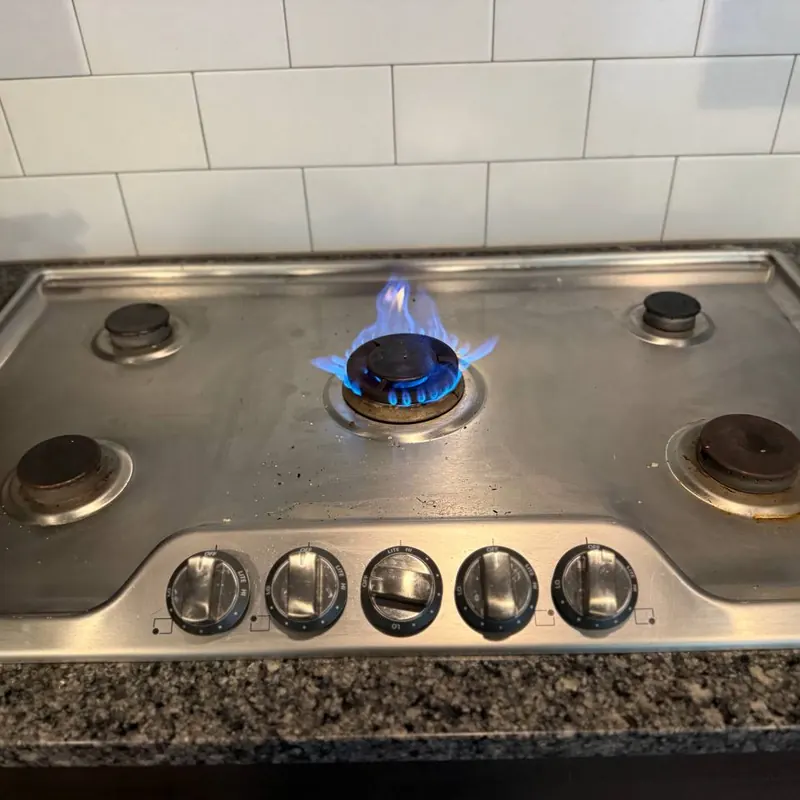
Grates off, one burner lit
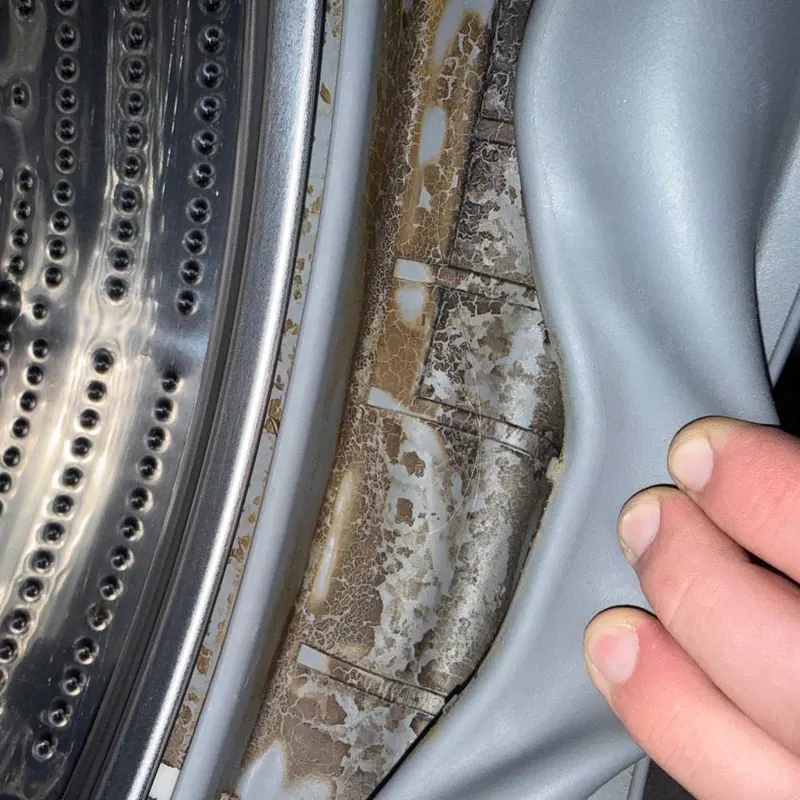
Door boot, folded back
Questions
About the fee
Do I hear the fee before you come?
Yes, on the callback, before a technician is on the road.
Can I just take the diagnosis?
Yes. The trip charge covers the visit and our tests, and you keep the written findings.
Can you look at a second machine on the same trip?
Sure. Mention it on the callback, and it gets checked and priced on its own line during the same visit.
Let us take a look
Give us a sentence about the trouble and your street. Our office rings you to agree on an hour and quote the trip charge; the repair figure follows in writing.